
What are broccoli microgreens?
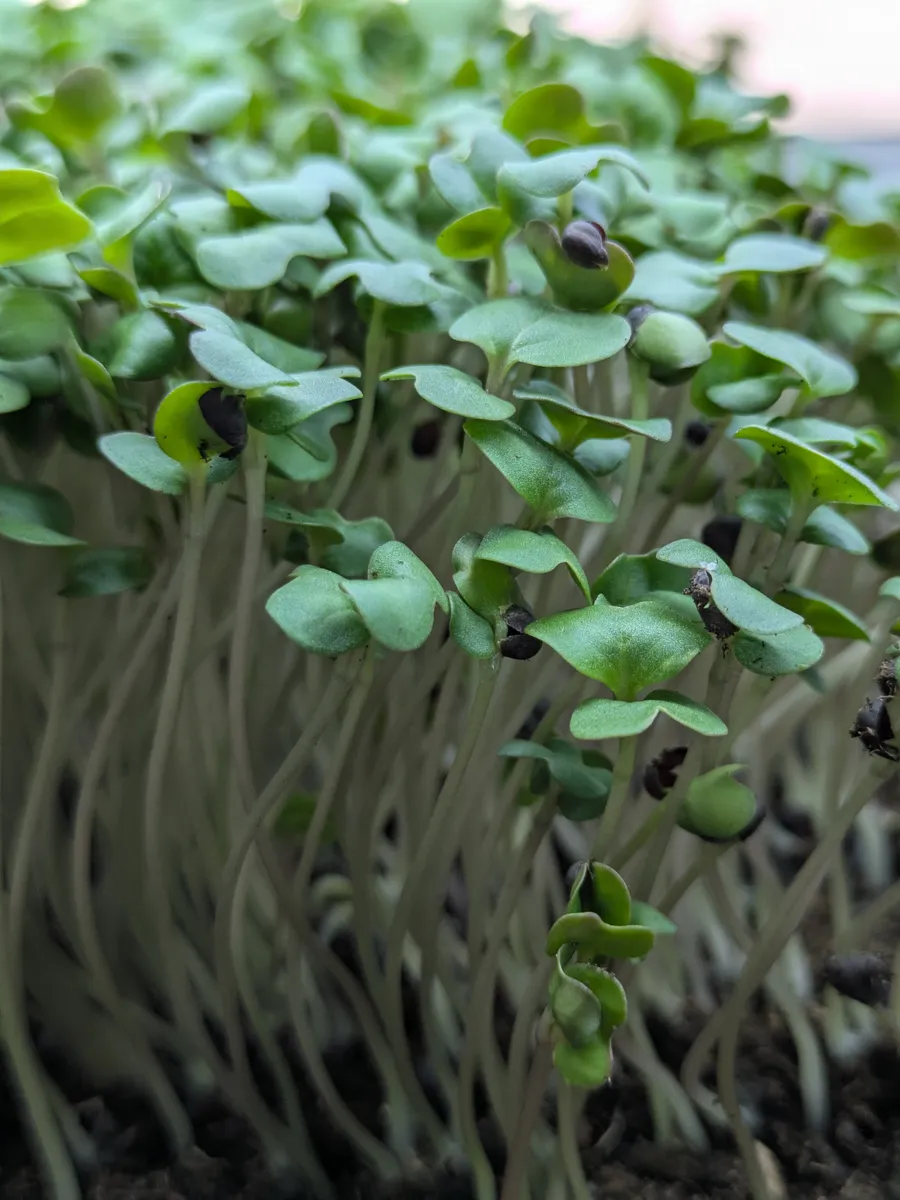
They're broccoli. The same broccoli you know from soups and Sunday dinners, only harvested 8 to 12 days after sowing, while the plant is still a thin stem and two small green leaves. If we didn't cut them, they'd keep growing until they formed the head you buy at the market. That takes a few months.
If you're not quite sure what a microgreen is yet, start with What are microgreens?. And if you mix them up with sprouts, you're not the only one: we explained the difference in Microgreens or sprouts.
Fun fact: broccoli, the kale in Portugal's caldo verde, cauliflower, cabbage and Brussels sprouts are all the same species, Brassica oleracea. Different varieties, one plant.
Radish is in the family too (Brassicaceae, the cabbage and mustard family), but it's a different genus. A cousin, not a sibling.
What do broccoli microgreens taste like?
Like broccoli, only mild. A clean, fresh taste that never takes over. They're crunchy, with slim stems and small leaves.
That mildness is what makes them so easy to use. Next to radish or mustard, which pack a real kick, broccoli sits quietly under everything else. If you're new to cooking with microgreens, start here.
Broccoli microgreens vs broccoli, side by side
| Broccoli microgreens | Broccoli | |
|---|---|---|
| Harvested at | 8 to 12 days | A few months |
| You eat | Stem and first leaves | The head (unopened flowers) and stalk |
| Taste | Mild and fresh | Strong, even more so cooked |
| Glucoraphanin | More per gram | Less per gram |
| In the kitchen | Raw, at the end | Boiled, stir-fried, roasted |
Are broccoli microgreens healthy?
Yes, like broccoli. They naturally contain vitamins A and C and minerals including calcium, iron and magnesium. But what made them famous is something else: glucoraphanin.
Glucoraphanin is a substance broccoli stores in its cells, and on its own it does nothing. In another corner of the cell, the plant keeps an enzyme, myrosinase. When you cut or chew broccoli, the two mix and make sulforaphane: the plant's chemical defence against insects, and one of the most studied molecules in the cabbage family. It works like a glow stick: two things kept apart that only react when you snap it.
So why does it matter? Sulforaphane is studied mainly for what it does to the body's own defences: it switches on the enzymes that fight oxidation and help clear out harmful substances. But almost everything we know comes from lab and animal studies. In people, the studies are still few and small.
And young plants have far more glucoraphanin: in 1997, a team at Johns Hopkins measured 10 to 100 times more glucoraphanin in 3-day-old broccoli than in mature broccoli, gram for gram.
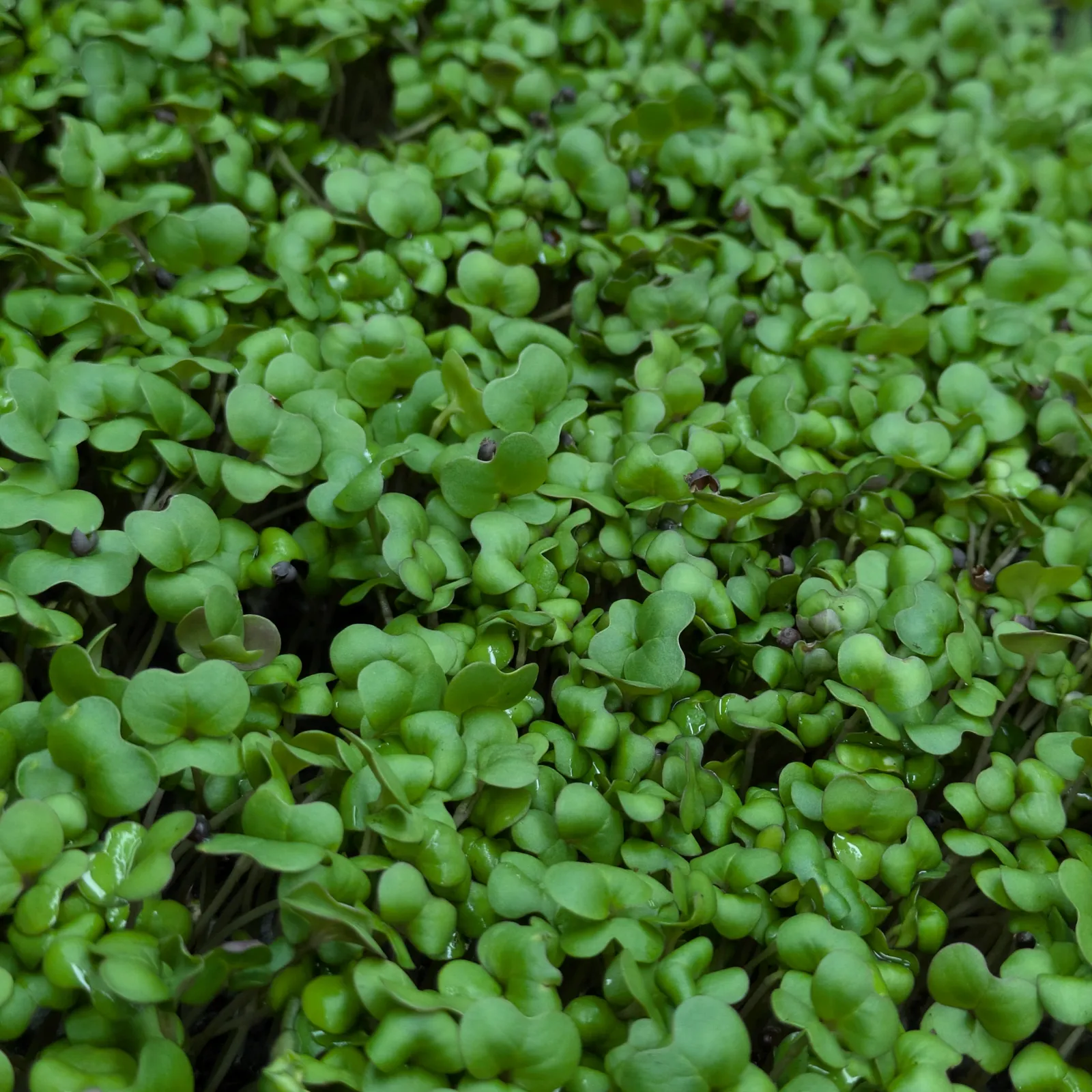
Two honest notes. First, that study used 3-day-old sprouts; broccoli microgreens are a little older, but still well above the broccoli head. Second, you eat a handful, not half a kilo. They're a good addition, not a miracle.
Microgreens in general do well in the lab too: a US Department of Agriculture study of 25 varieties found that most had more vitamins and carotenoids per gram than the mature leaves of the same plant.
How do you eat broccoli microgreens?
Raw, and at the end. Myrosinase, the enzyme that makes sulforaphane, doesn't survive heat. So broccoli microgreens go on off the heat, on top of the dish, like all microgreens. Cutting or chewing them well helps: that's when the reaction happens.
A few ideas:
- Eggs, any way you like: scrambled, poached, in an omelette.
- Juices and smoothie bowls, where the mild taste barely shows.
- Wraps and toast, for freshness and crunch.
- Pasta salads and rice salads.
- Caldo verde, on top, once it's in the bowl. It's all one family, after all.
How are they grown?
They're among the easiest. The seeds don't need soaking: they're spread over the growing medium, spend 3 to 4 days in the dark, stacked with a weight on top, and then go into the light. After 8 to 12 days, when the first two leaves are open and green, they're cut above the root. We told the story of our first go in First attempt.
Frequently asked questions
Are broccoli microgreens the same as broccoli sprouts?
No. Sprouts germinate in water alone and are eaten whole after 3 to 5 days. Broccoli microgreens grow in a growing medium, go into the light and are cut at 8 to 12 days, once they have leaves.
Can you cook broccoli microgreens?
You can, but they lose their colour, their crunch and their myrosinase. They're best raw, on top of the dish.
How much broccoli microgreens should you eat a day?
There's no set amount. A handful per meal is the usual way to use them.
Where can I buy broccoli microgreens in Porto?
We grow them at VerdeNova and deliver them in Porto. See micro broccoli in the shop.
Stay with us and watch VerdeNova grow, seed by seed.