So what are microgreens?
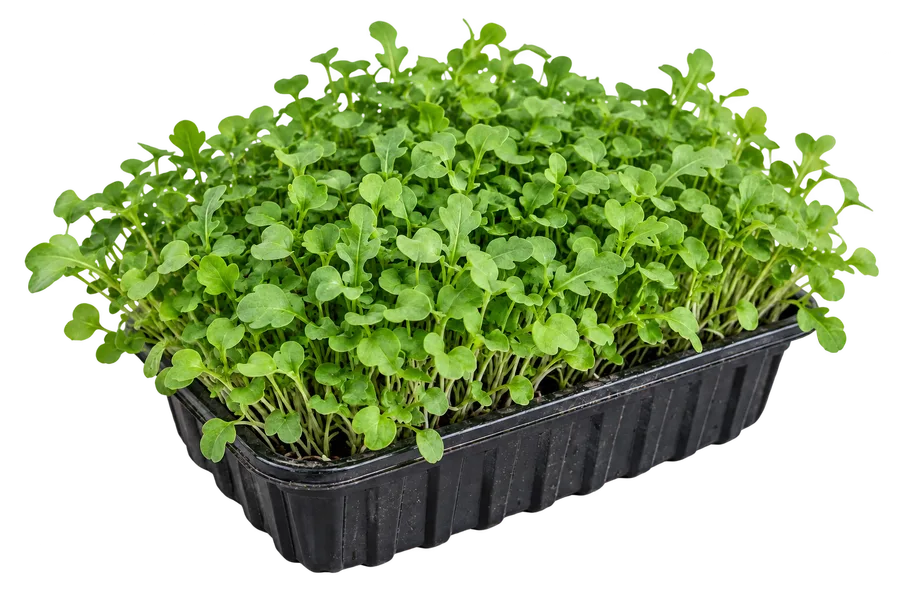
Contrary to what the name might suggest, microgreens (also known as microvegetables or micro leaves) are not miniature vegetables. They are plants that, in most cases, we already know very well: rocket, broccoli, radish, peas, sunflower, mustard, coriander and many others.
The difference lies above all in when they are harvested. While we let a rocket plant grow for weeks until it forms the bunch of leaves we find at the supermarket, a micro rocket is harvested right at the start of the plant's life. Depending on the variety, microgreens can be ready to harvest around 7 to 21 days after germination.
By then they already have those first small leaves that appear when the seed germinates and, in many cases, the plant's first true leaves are starting to come through as well.
And if we don't harvest them? They keep growing.
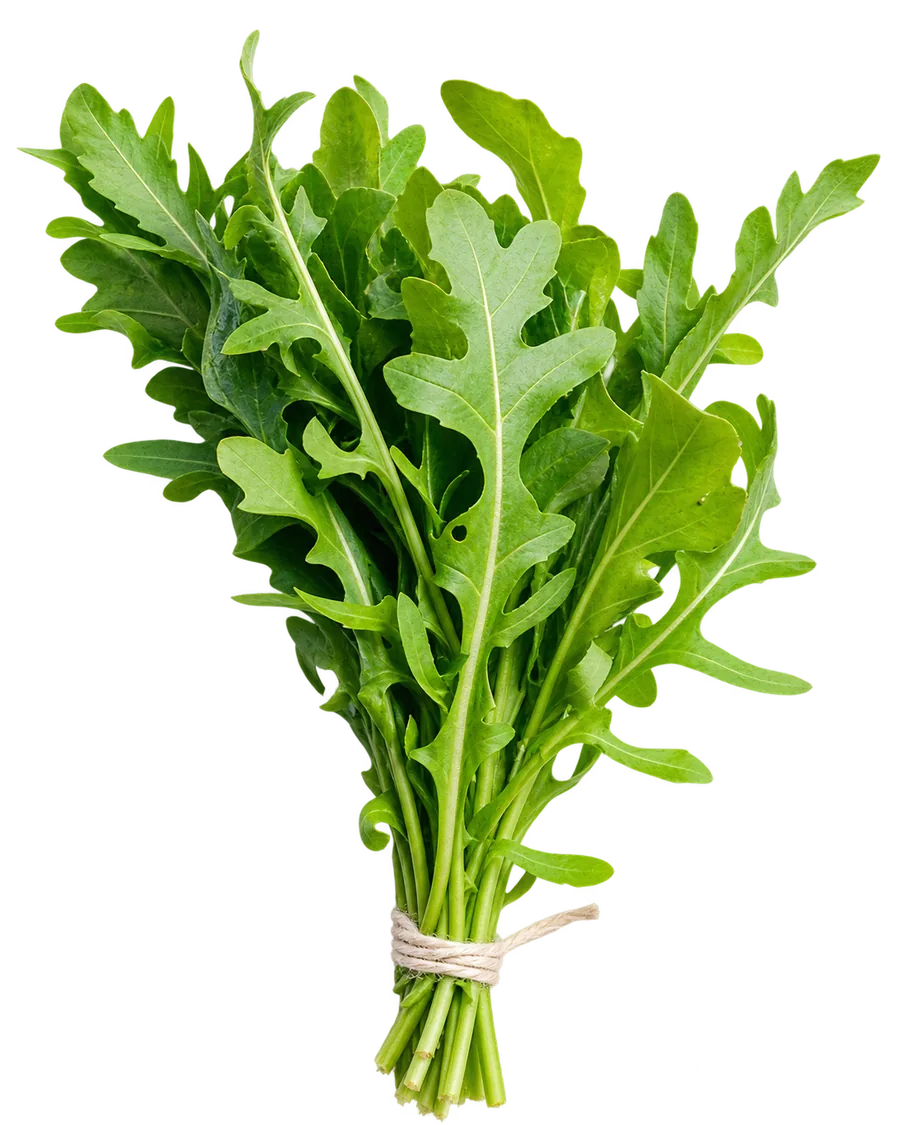
A microgreen is not a different species, nor a special version of the plant. It is simply a plant harvested very early in its life cycle. Left to grow, that small micro rocket would carry on along its way until it became a fully grown plant.
Small, yes. Nutritionally insignificant, not so much. It is precisely at this early stage that a great deal happens inside the plant.
The seed contains the reserves needed to fuel that first growth and, during the first few days, the plant is in an extremely active period of development. That is why many microgreens contain high concentrations of vitamins, carotenoids, minerals and other bioactive compounds.
And do they all taste the same? No. Thankfully.
When someone sees a punnet full of small green leaves, it is easy to assume the flavour must be more or less the same too. Not at all.
There is an enormous variety of microgreens and the flavour and texture profiles can change completely from one to another. Some are mild. Some are sweet. Some are fresh. Some have a surprisingly intense flavour. And there are some that give you a proper kick.
And then there's the colour.
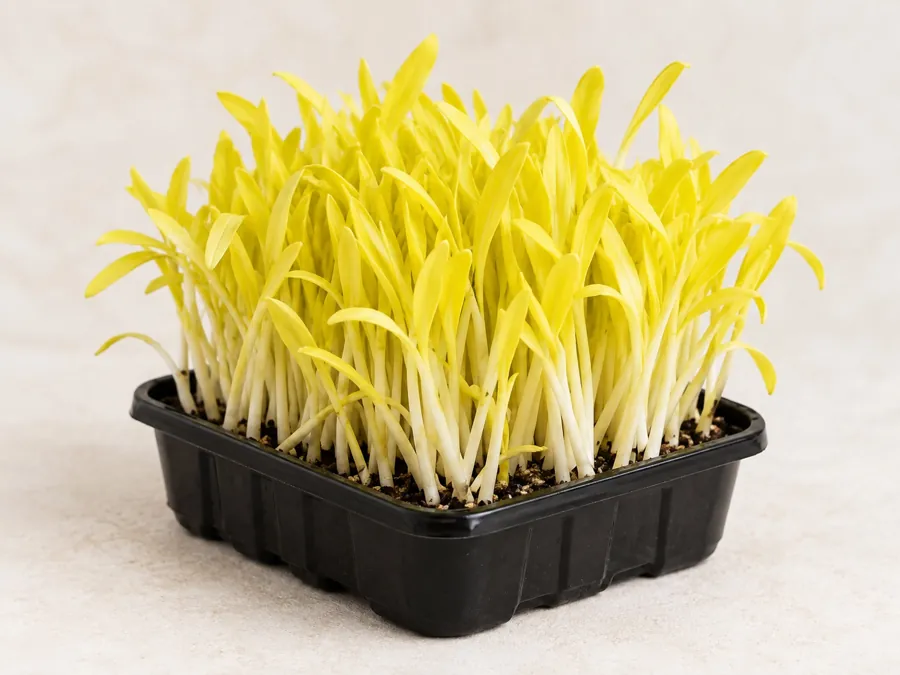
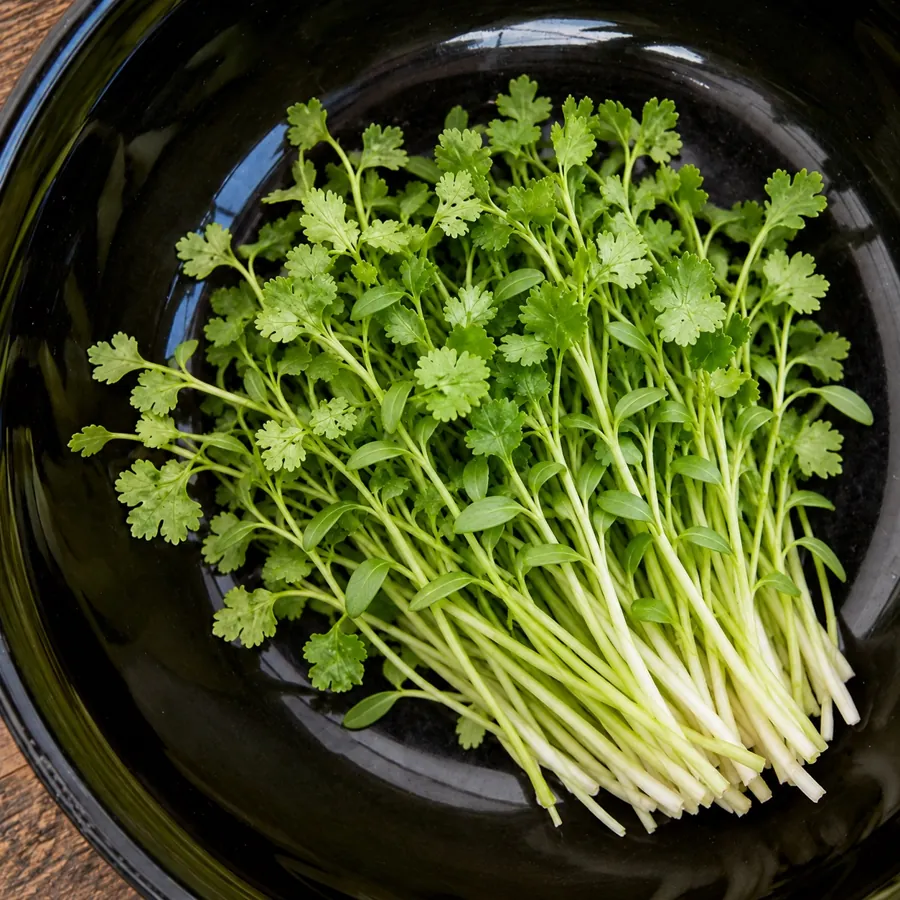
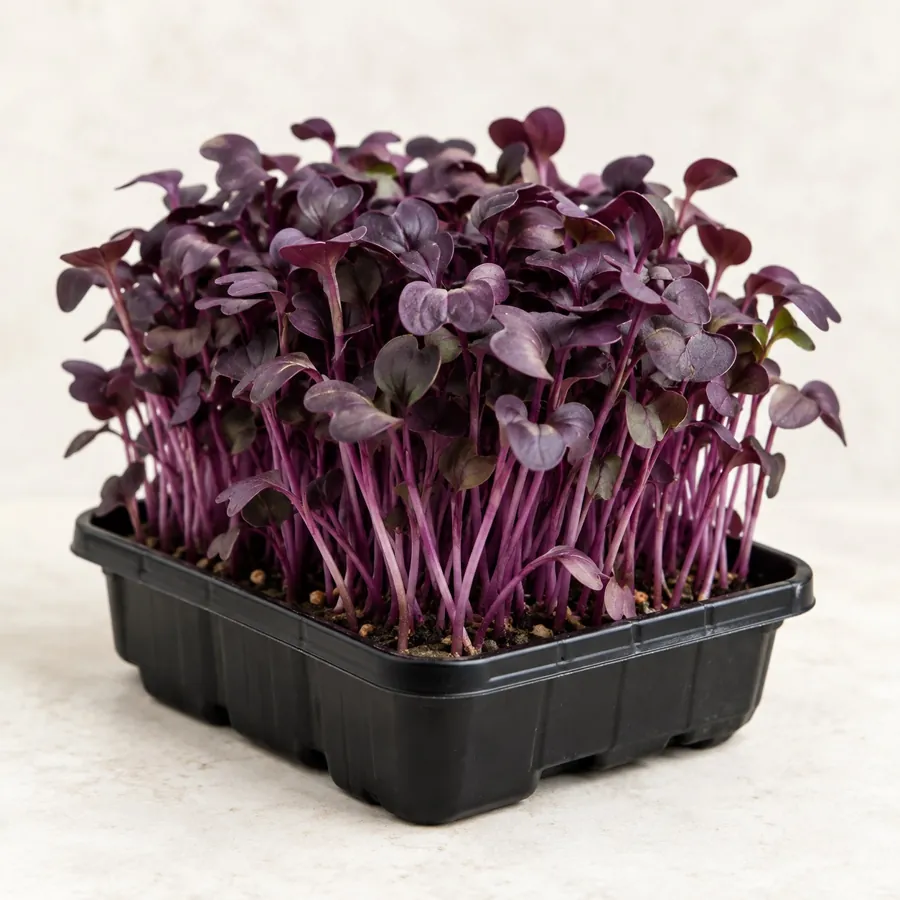
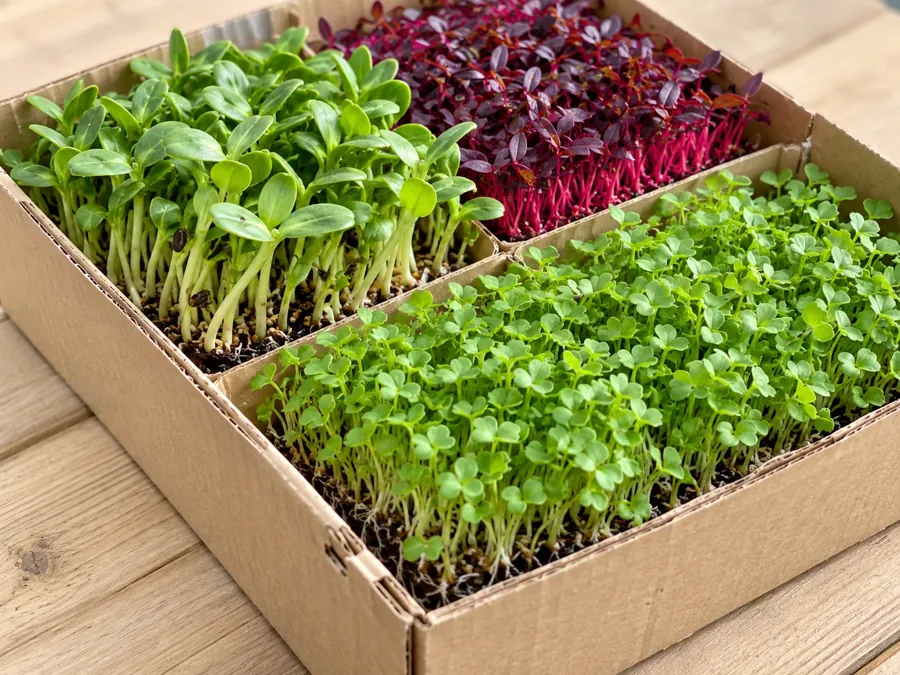
Light green, dark green, yellow, red, pink, purple...
Some varieties have stems that are almost fluorescent. Others, completely purple leaves. Others look like tiny versions of the grown plants. For us, that variety is one of the most interesting parts of microgreens. Each variety can play a different role.
So... what do we do with them? Well then.
Pretty much everything.
With meat. With fish. With eggs. In a salad. Inside a sandwich. On top of a soup. In pasta. In a smoothie. At breakfast. Or on that fancy dessert that looks like it came straight out of a restaurant kitchen.
Don't be afraid to experiment. There are so many combinations of flavour and texture that there is probably a microgreen for almost every taste and mood. And yes: we'll be leaving recipes here too.
We want this Journal to be not only about how we produce the food, but also about what happens after it leaves the farm. That is: when it reaches the kitchen.
So why is VerdeNova starting with microgreens?
Because we have to start somewhere. And we would rather start small and learn fast than try to grow twenty different products at the same time and do all of them more or less.
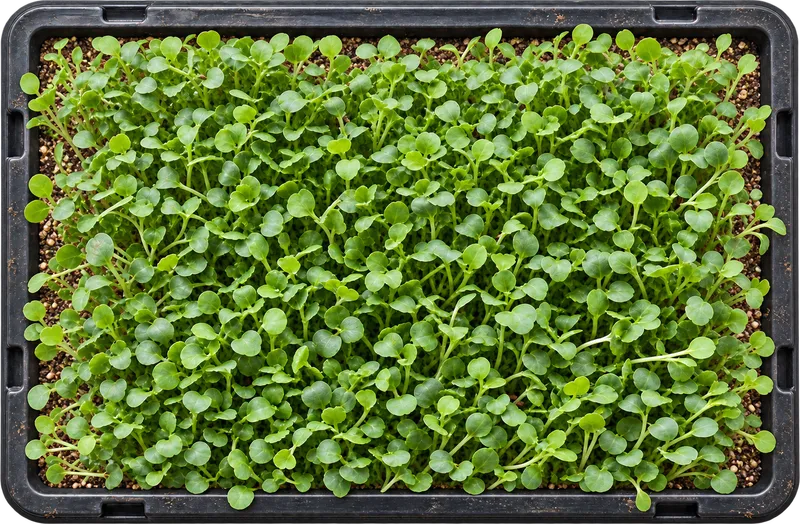
Microgreens have one characteristic that is especially interesting for a farm that is just starting out: they grow fast. Some varieties can be ready to harvest in a little over a week. That means we can run a test, observe the result, find problems, change whatever is needed and start again without having to wait months to find out whether it worked.
For us, that is worth gold. Because at this stage we want to learn. A lot.
We want to understand which varieties adapt best to our system. Which seeds germinate most consistently. How long each crop takes. How much water it uses. What the ideal density is. When the best moment to harvest is. How the flavour changes as it grows. How long it holds its quality after harvest.
And above all: what people really want to eat.
But we haven't started planting yet.
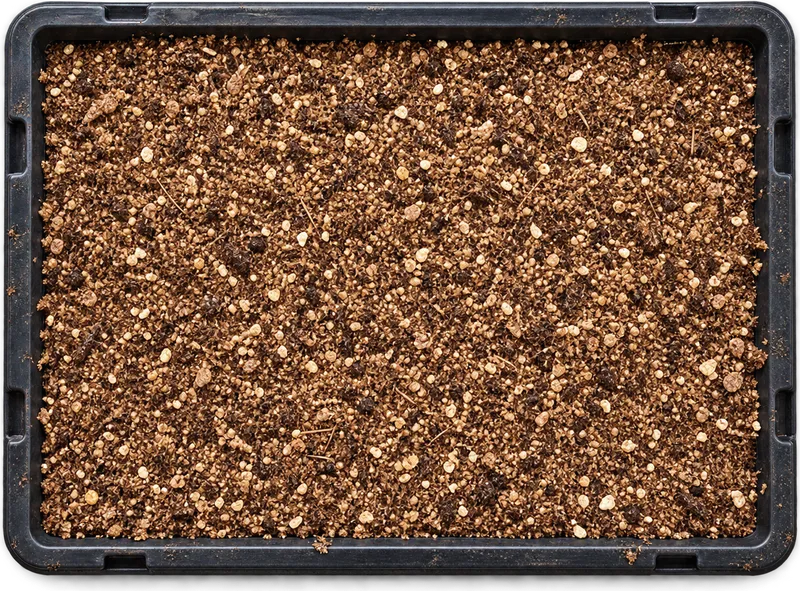
And that is intentional. Right now we still don't have rows and rows of green trays inside VerdeNova. Before we start producing to sell, we want to talk to the people who will eventually buy what we grow. Restaurants. Chefs. People who cook at home. We want to understand which varieties interest them, how much they would use, how often they would buy and what are currently the biggest difficulties in finding fresh, consistent produce. Because we might think everyone is desperately in need of micro rocket.
But it is worth asking first.
The goal is simple: we don't want to plant blind. We want to build our growing calendar around real demand. And microgreens give us an excellent opportunity to do precisely that. Start with a few varieties. Test. Listen. Learn. Improve. And only then grow.
And now?
Now the interesting part begins. There are seeds to choose. Equipment to set up. Trays to test. Systems to fine-tune. Varieties that will probably go very well. And others that will probably give us a headache.
We don't know everything yet. And that is precisely why we decided to start this Journal now and not a year from now, when everything is neat, fine-tuned and ready to be photographed.
We want to show what happens before that, too. The first tests. The first failures. The changes of mind. The first trays. The first harvests. The first customers. And everything we don't even know yet is going to happen.
This is where it starts.
Stay with us and watch VerdeNova grow, seed by seed.